I can't believe the last thing I posted on this blog was about Ezra Koenig! (Maybe some of you have forgotten who he is, given that he hardly tweets at all anymore. I don't blame you.)
Last year, I said I'd do away with reading challenges, and so I have. I've also done away with Goodreads ratings, for the most part: there's something absurd, isn't there, in asking the present-day reading population to rate Common Sense — for instance — on a scale of one to five. (It's currently at 3.97, for those wondering. One one-star review by a "Parentheses Enthusiast" remarks that the pamphlet is "DRY. DRIER THAN AN ANCIENT RAISIN IN THE MIDDLE OF THE ATACAMA DESERT.") But here are five books I read in the past year that I would have rated four or five stars, I suppose, and that you might feel similarly about:
5. THE SHEPHERD'S LIFE (James Rebanks)
One of the first things I saw when I arrived in England last May, apart from the inside of the Manchester airport, was a group of sheep grazing on a highway median. That set the tone for the next few months, during which I developed a surprising affinity for sheep of all stripes; I picked this book up in the same airport on my way home. Rebanks writes of his childhood (and adulthood) spent as a shepherd in the Lake District, so there are no highway medians here, but it's no less interesting for it. The Shepherd's Life is at once memoir and cultural history (its subtitle, in some editions, is A People's History of the Lake District). It is better as the latter than as the former, although Rebanks's account of his journey from his sheep to Oxford to London and (finally) back to his sheep is necessary — it shows us that he's the best-placed person to do what he does in this book, which is to advance a critique of capitalist society from the point of view of a pre-industrial profession. I don't know if that's what Rebanks intended, exactly, but I do think that's what makes this book so valuable.
#4 through #1, under the cut.

Showing posts with label books!. Show all posts
Showing posts with label books!. Show all posts

4.1.17
2016: six books you'll like and several you might
[An aside: 2017, for me, is the year I do away with reading challenges -- because a) certain things took precedence, rightly, over my book-a-week goal this year and will continue to do so in coming years, b) if I'm ever going to finish The Making of the Atomic Bomb once and for all, I'll have to spend a solid summer on it, and c) in times like these -- not the times that try men's souls, but the ones leading up to them, if we're lucky -- I'd like to reread the complete works of Laura Ingalls Wilder.]
6. ON WOMEN AND REVOLUTION (Crystal Eastman) if you can find it.
Crystal Eastman (1881-1928; prolific writer, co-founder of the ACLU) was an extraordinary woman, but the titular and is an extraordinarily misleading and. I picked up this long out-of-print book (here!) in the hope that each essay inside addressed women and revolution together, but On Women and Revolution is in fact divided into two parts: Crystal Eastman on Women and (surprise) Crystal Eastman on Revolution. The former section is, I think, of more interest to the casual feminist than the latter is to the casual leftist; Eastman's writings on feminism are at once mordant (Winston Churchill is "full of beans" to her) and moving, and it's worth noting just how many of her concerns remain our concerns -- a full century later.
(Almost) as before: #5 through #1 + extras, under the cut.
6. ON WOMEN AND REVOLUTION (Crystal Eastman) if you can find it.
Crystal Eastman (1881-1928; prolific writer, co-founder of the ACLU) was an extraordinary woman, but the titular and is an extraordinarily misleading and. I picked up this long out-of-print book (here!) in the hope that each essay inside addressed women and revolution together, but On Women and Revolution is in fact divided into two parts: Crystal Eastman on Women and (surprise) Crystal Eastman on Revolution. The former section is, I think, of more interest to the casual feminist than the latter is to the casual leftist; Eastman's writings on feminism are at once mordant (Winston Churchill is "full of beans" to her) and moving, and it's worth noting just how many of her concerns remain our concerns -- a full century later.
(Almost) as before: #5 through #1 + extras, under the cut.
27.11.16
here lies harry potter (1997-2016)
(his creator killed him)
Let's get this out of the way: Fantastic Beasts and Where to Find Them isn't a particularly good film. It's like J.K. Rowling tried to combine the childlike whimsy of Harry Potter and the Sorcerer's Stone with the rather grown-up plots and characters of her Cormoran Strike novels. If that sounds like it wouldn't work -- well, it didn't work. Fantastic Beasts doesn't have a cohesive "feel": it never quite decides whether it wants to embody the spirit of its namesake book or be, uh, vaguely American Gothic? (Who knows, honestly?) Rowling also seems to have attempted to write a novel instead of a screenplay: Fantastic Beasts is full of throwaway dialogue that works beautifully as character development in her later, 800-page Harry Potter books, but that sort of thing doesn't work so beautifully in a two-hour film whose most interesting character is a Niffler.
Now, if you ask the Harry Potter fanbase, many of the eight Harry Potter movies aren't particularly good films either -- but the books they're based on are wonderful. After all, that's why Harry Potter and the Sorcerer's Stone became a film in the first place. Fantastic Beasts is a blatant attempt to cash in on the franchise's enduring popularity, and its inspiration isn't a beloved children's story, but a spin-off book that was itself a blatant attempt to cash in on the franchise's popularity (for charity, so I won't complain too much). Like most mistakes, the Fantastic Beasts film would be forgivable if Rowling and Yates promised to never do anything like it again, but --
Let's get this out of the way: Fantastic Beasts and Where to Find Them isn't a particularly good film. It's like J.K. Rowling tried to combine the childlike whimsy of Harry Potter and the Sorcerer's Stone with the rather grown-up plots and characters of her Cormoran Strike novels. If that sounds like it wouldn't work -- well, it didn't work. Fantastic Beasts doesn't have a cohesive "feel": it never quite decides whether it wants to embody the spirit of its namesake book or be, uh, vaguely American Gothic? (Who knows, honestly?) Rowling also seems to have attempted to write a novel instead of a screenplay: Fantastic Beasts is full of throwaway dialogue that works beautifully as character development in her later, 800-page Harry Potter books, but that sort of thing doesn't work so beautifully in a two-hour film whose most interesting character is a Niffler.
Now, if you ask the Harry Potter fanbase, many of the eight Harry Potter movies aren't particularly good films either -- but the books they're based on are wonderful. After all, that's why Harry Potter and the Sorcerer's Stone became a film in the first place. Fantastic Beasts is a blatant attempt to cash in on the franchise's enduring popularity, and its inspiration isn't a beloved children's story, but a spin-off book that was itself a blatant attempt to cash in on the franchise's popularity (for charity, so I won't complain too much). Like most mistakes, the Fantastic Beasts film would be forgivable if Rowling and Yates promised to never do anything like it again, but --
5.1.16
ten books i can in good conscience recommend to almost every single one of you (+ some i can't)
[out of all the ones I read in 2015, the full list of which you can find here.]
10. A MADMAN DREAMS OF TURING MACHINES (Janna Levin) if you like the idea of logic more than you like logic itself.
A brilliant little book that's highly speculative in its detailing of the lives and loves and genius and internal suffering of Kurt Gödel and Alan Turing: but Levin doesn't seek to depict these men with total accuracy (this is a work of fiction, after all) so much as she wants to make us feel the beauty and revolutionary nature of their ideas, contrasted with the ultimately tragic lives they led -- wracked as both were with loneliness, illness and the myriad punishments of nonconformity. Their ideas intersect as their lives parallel each other (resulting in a few genius storytelling moments) and (bonus!) the book's held together by the ever-present Wittgenstein. (I maintain that he's haunting me.)
#9 through #1 + extras, under the cut.
10. A MADMAN DREAMS OF TURING MACHINES (Janna Levin) if you like the idea of logic more than you like logic itself.
A brilliant little book that's highly speculative in its detailing of the lives and loves and genius and internal suffering of Kurt Gödel and Alan Turing: but Levin doesn't seek to depict these men with total accuracy (this is a work of fiction, after all) so much as she wants to make us feel the beauty and revolutionary nature of their ideas, contrasted with the ultimately tragic lives they led -- wracked as both were with loneliness, illness and the myriad punishments of nonconformity. Their ideas intersect as their lives parallel each other (resulting in a few genius storytelling moments) and (bonus!) the book's held together by the ever-present Wittgenstein. (I maintain that he's haunting me.)
#9 through #1 + extras, under the cut.
18.9.15
buddenbrooks
as mentioned earlier. i wish i could read german, or at least appreciate exactly what certain german dialects (the usage of which mann seems so fond) imply about their speakers. i cannot and may never, but i recommend this book anyway, as it was recommended to me — for those who read jane austen and know something of german history and eat chocolate with an eighty-five percent cacao content.
_Original-_Broschur.JPG/450px--2.3-_Buddenbrooks_(1901)_Original-_Broschur.JPG)
lost in (the first, lowe-porter) translation: much of the book's charm, i think.* i could barely get past the endless descriptions of one (1) dinner at the beginning of the book. i had no idea how anyone, much less the highly intelligent person who recommended it to me, could call buddenbrooks their favorite book. the woods translation remedies this; it wasn't a chore to read, not at all. it was a joy! the purest of them! plein de gratuitous french to boot! the chapters are of such manageable sizes that buddenbrooks managed to break my heart every morning over a bowl of oatmeal.**
30.8.15
consumed, lately
by forces within and without: me. i've been at college for one-point-five weeks, in class for point-five. the bullet journal has kept me out of trouble. by "out of trouble," i mean that i've taken my multivitamin every day, i haven't been late to anything (yet), and i did my laundry before i ran out of clothes. two small victories! and one big one! yes, that last is really an accomplishment, considering that i didn't pack enough clothes.
by me: a few books, more films (rare!), some good food.even more not-so-good food.
by me: a few books, more films (rare!), some good food.
4.7.15
the pursuit of happiness
FALL OUT BOY AMERICANA: here, here, and here. also, the entire oft-forgotten pax am days ep.
let us now consider the bookshelf of the author, who is trying to pack books for a ten-hour plane ride. out of 100 books on this shelf:
dead white men, the fourth of july, america! here is a quiz that will tell you which founding father you most resemble in personality, and it's not the one you'd think might follow that sentence. (forty-six books are by american authors.)
i'd like to say that this is more a reflection of my buying & taking-books-from-my-dad habits than my reading habits, as i'm more inclined to frequent the library than to spend money. (except when i rack up fines, oops!) that said, recent purchases include: 1) thomas mann's buddenbrooks, which will advance nothing, but which i will read anyway because it was specifically recommended to me because of my deep love for pride and prejudice, and 2) murakami's sputnik sweetheart, which i bought because it got me right to the 'free shipping' benchmark on bn.com.
p.s. @uswnt !!!
let us now consider the bookshelf of the author, who is trying to pack books for a ten-hour plane ride. out of 100 books on this shelf:
- twenty were written by women; seven of those women had the first name jane
- two were written by writers of color. writer, rather, as they're both ishiguro.
- twenty-five were written by authors still alive today; half (!) of those are history books. i only own eighteen total history books.
dead white men, the fourth of july, america! here is a quiz that will tell you which founding father you most resemble in personality, and it's not the one you'd think might follow that sentence. (forty-six books are by american authors.)
i'd like to say that this is more a reflection of my buying & taking-books-from-my-dad habits than my reading habits, as i'm more inclined to frequent the library than to spend money. (except when i rack up fines, oops!) that said, recent purchases include: 1) thomas mann's buddenbrooks, which will advance nothing, but which i will read anyway because it was specifically recommended to me because of my deep love for pride and prejudice, and 2) murakami's sputnik sweetheart, which i bought because it got me right to the 'free shipping' benchmark on bn.com.
p.s. @uswnt !!!
29.6.15
hello
a blog*, a log, a goliath frog -- WORDS ARE CATEGORICAL!
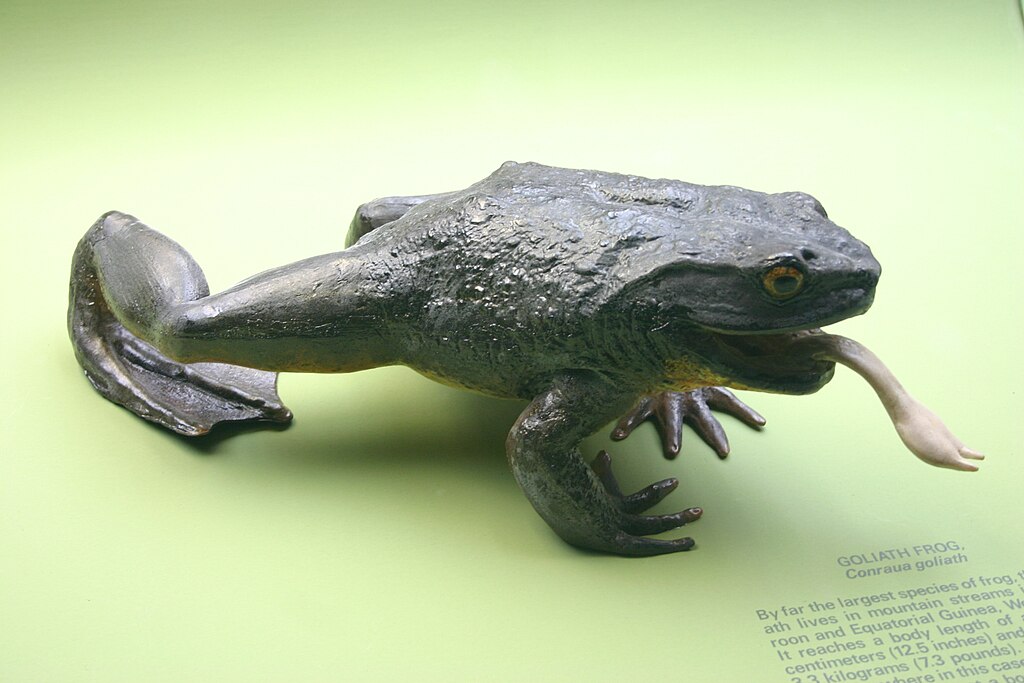
*i am fully aware that blogging is capital-o over, as evidenced by the fact that ezra koenig stopped blogging in 2006. i don't mind!
Subscribe to:
Posts
(
Atom
)